

A day cream for glowing skin should suit your skin type, not just promise a brighter-looking finish. Choose a comfortable texture and formula for oily, dry, combination, normal, or sensitive skin, then use it consistently in your morning routine. Skin that feels comfortable and hydrated is a practical starting point for a fresh appearance.
A day cream should do more than sit on the skin. The right choice can support hydration and the skin’s moisture barrier without feeling too heavy or leaving dry areas undernourished. Matching the cream to your skin’s needs makes your routine more intentional and easier to maintain.
This guide explains how to identify your skin type, what to look for in a day cream, and how to apply it evenly. You’ll also learn how to adjust your choice when your skin feels oily, tight, or sensitive, and how ALPHA GLOW+ DAY CREAM may fit into a simple daytime routine.
Key Takeaways
- Match the cream’s texture and feel to your skin type, then adjust if your skin feels greasy, tight, or uncomfortable.
- Look beyond a glowy finish: choose a moisturiser that supports daily hydration and fits comfortably into your routine.
- Apply day cream evenly to clean skin, and treat sun protection as a separate step unless your cream provides it.
- Explore ALPHA GLOW+ DAY CREAM as a daytime option, and pair your routine with sunscreen when you need sun protection.
Choosing cream by skin type
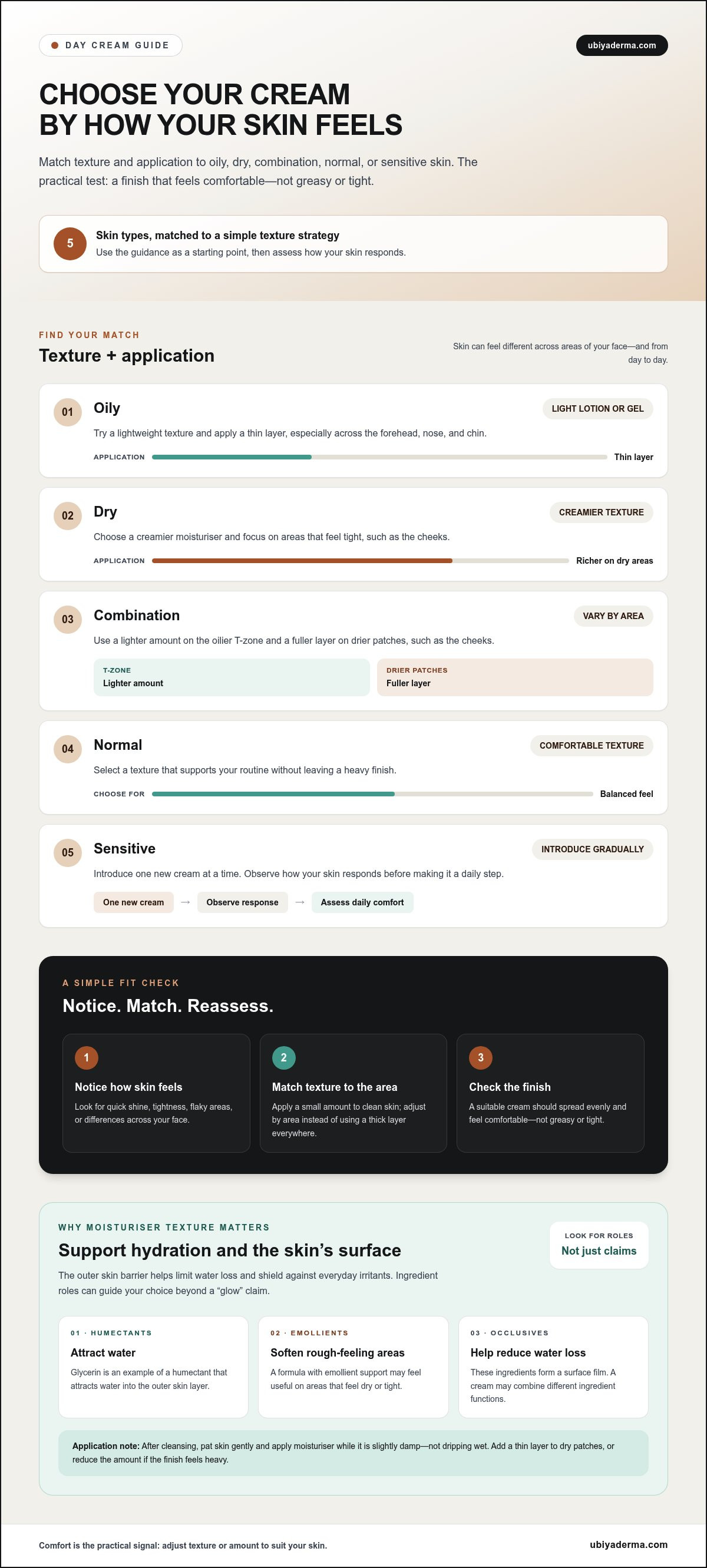
Notice how your face feels after cleansing and throughout the day. If shine appears quickly across your forehead, nose, and chin, a lightweight cream may feel more comfortable. If your cheeks feel tight or flaky, try a richer texture that leaves them feeling comfortable. These observations help you choose a day cream for glowing skin based on how your skin feels, not just how it looks.
Skin type can vary across your face. Combination skin often feels oilier through the T-zone and drier on the cheeks, so one very heavy or very light texture may not suit every area. Normal skin generally feels balanced, while sensitive skin may react uncomfortably to some formulas. Choose a cream suited to your skin type, then assess how it feels after application.
- Oily: Try a light lotion or gel texture. Apply a thin layer, especially across the forehead, nose, and chin.
- Dry: Choose a creamier texture and spread it over areas that feel tight, such as the cheeks.
- Combination: Use a lighter amount on the T-zone and a fuller layer on drier patches.
- Normal: Select a comfortable texture that supports your routine without leaving a heavy finish.
- Sensitive: Introduce one new cream at a time and observe how your skin responds before making it a daily step.
Use this simple process: identify areas that feel oily or dry, choose a matching texture, then apply a small amount to clean skin. Check whether the finish feels comfortable rather than greasy or tight. If your cheeks need more moisture than your T-zone, adjust the amount by area instead of applying a thick layer everywhere. This helps you choose a suitable cream while keeping your routine simple.
Skin can feel different from day to day, so reassess your cream if it starts to feel too heavy or insufficient. The practical test is comfort: it should spread evenly and work well with the rest of your morning routine.
Day creams and moisturisers for glowing skin
A daytime moisturiser should support hydration and leave a finish that suits your routine. Compare its texture, ingredient purpose, and sun protection separately before choosing.
Day Creams for Glowing Skin
A cream can improve the appearance of dull, dry skin by adding moisture and smoothing its surface. “Glow” isn’t a specific formula type; it describes an appearance influenced by hydration, texture, and how a product sits on the skin. Check the ingredient list and intended use, then choose a finish that feels comfortable under makeup or on bare skin.
Try a simple test: apply the cream to clean skin and see whether it spreads evenly without feeling greasy or tight. A lightweight lotion may suit someone who dislikes a rich finish, while a creamier moisturiser may feel more comfortable on dry areas. Check the label directions to see how the formula fits into your morning routine.
SPF in Day Creams
A day cream doesn’t need to contain SPF if you apply sunscreen separately. If you rely on a moisturiser for sun protection, check that its label states an SPF and follow the application directions. A brightening claim or lightweight texture doesn’t mean the product protects against sun exposure.
Choose sun protection by checking the label and considering how long you expect to be outdoors, then apply it as directed. A separate sunscreen makes this step clear, especially when your moisturiser doesn’t include SPF. Keep their roles distinct: moisturiser supports hydration, while sunscreen provides the protection stated on its label.
Brightening Cream Safety
Are brightening day creams safe for daily use? They can be used daily when the product directions allow it and the formula feels comfortable on your skin. Follow the label, introduce one new brightening product at a time, and observe your skin’s response before adding other new products.
If a formula causes discomfort, stop using it instead of applying more to pursue a brighter finish. Avoid combining several unfamiliar products at once, as this makes it harder to identify which one may be irritating your skin. A measured routine makes daily use easier to assess.
As a final step, keep your routine focused: moisturiser for hydration, and a separately labelled sunscreen when needed. A daytime skincare routine is easier to follow when each product has a clear role and you apply it according to its directions.
Hydration and the skin moisture barrier
Your skin’s outer barrier helps limit water loss and shield against everyday irritants. If your skin feels dry or tight after cleansing, it may need more hydration or your routine may be too stripping. A moisturiser supports the skin’s surface with water-binding and softening ingredients. The effect depends on the formula and how it feels on your skin.
Look at ingredient roles rather than relying on a single “glow” claim. Humectants, such as glycerin, attract water into the outer skin layer. Emollients soften rough-feeling areas, while occlusive ingredients form a surface film that helps reduce water loss. A cream may combine these functions. For example, skin that feels tight after washing may benefit from a formula with both humectant and emollient support.
Application matters, too. After cleansing, gently pat your face, then spread moisturiser over the skin without rubbing aggressively. If your skin feels comfortable afterward, the amount and texture may suit your routine. If it still feels tight, apply a little more to dry areas rather than layering heavily over your whole face. If the finish feels greasy, you may prefer a lighter texture.
- After cleansing: Apply moisturiser while your skin is slightly damp, not dripping wet.
- For dry patches: Smooth an additional thin layer over areas such as the cheeks.
- For a heavy finish: Reduce the amount or select a lighter lotion texture.
Keep other routine steps consistent while assessing a moisturiser. Changing your cleanser and cream at the same time, for example, makes it harder to identify what caused tightness or discomfort. Introduce one product at a time, follow its directions, and observe your skin’s response. This helps you distinguish a hydration issue from a reaction to another step.
A comfortable, barrier-supporting routine is simple and repeatable: cleanse gently, moisturise, then apply sunscreen as a separate daytime step when needed. If a product causes stinging or persistent irritation, stop using it. Adjusting one step at a time helps you identify a better-fitting formula without adding unnecessary products.
Does a day cream need SPF, and what SPF is recommended?
A day cream doesn’t need SPF if you use a separate sunscreen. If you want one product to moisturise and provide sun protection, choose one labelled for both functions. Check its SPF and follow the directions. A brightening claim alone doesn’t indicate that a cream protects against sunlight.
There isn’t one SPF number that suits every situation. Choose based on the product’s stated protection and how you’ll use it, including whether you’ll spend time outdoors. If you’ll be outside in Nepal, use a sunscreen labelled with SPF and follow its application instructions. Don’t infer sun protection from a cream’s texture or finish.
- Check the label: Confirm that the product states an SPF value and provides application directions.
- Separate product roles: A moisturiser supports hydration; a sunscreen provides the protection described on its label.
- Plan for outdoor time: Apply sunscreen as directed, especially when your routine includes extended time outdoors.
Layering affects the order of your morning routine. Apply moisturiser first, then use a separate sunscreen according to its label. If you choose a day cream that includes SPF, follow its directions rather than assuming a thin layer provides the stated protection. Keep the label accessible so you can follow any instructions for use during the day.
For example, someone applying moisturiser before leaving home can add a separate sunscreen step rather than relying on a brightening cream. UV Defense Creamy lotion sunscreen is an option for that separate step; follow its label for application guidance. Explore sunscreen options to support a routine that keeps moisturising and sun protection distinct.
Ubiya Derma: ALPHA GLOW+ DAY CREAM
ALPHA GLOW+ DAY CREAM is an option for a simple morning routine. Its listed formula includes niacinamide, alpha arbutin, and ceramide. Choose it based on your skin’s needs and preferred texture, and follow the product directions as part of your daily skincare routine.
Keep its role clear: a day cream isn’t a replacement for sunscreen unless its label states that it provides sun protection. When needed, pair moisturiser with a separately labelled sunscreen. This distinction helps you build a routine for hydration and sun protection without assuming one product does both.
For product details, visit ubiyaderma.com.
Make your next routine step deliberate
Notice how your skin responds to a routine you can maintain. Use that experience to choose products with clear roles rather than adding several new steps at once. A day cream for glowing skin should suit your preferences and daily care, not replace sunscreen or other products with a different purpose.
Ubiya Derma offers ALPHA GLOW+ DAY CREAM for daytime use, alongside Retinova Night Retinol 0.3% Serum and UV Defence Silicon matte Sunscreen Gel. Consider each product according to its place in your routine, and follow its directions. If you want to explore these options or discuss your skincare choices, contact Ubiya Derma.
Build your routine at a pace that helps you understand what suits your skin. A considered next step can make daily care easier to follow.
Frequently Asked Questions
How to choose a day cream for oily, dry, sensitive, or combination skin?
Choose a formula by observing how your skin behaves throughout the day, not just after cleansing. If your forehead becomes shiny while your cheeks remain comfortable, for example, apply less product to your T-zone. If a new cream feels uncomfortable, stop using it and return to a familiar routine. A day cream for glowing skin should feel suitable on the areas where you apply it.
Day cream vs moisturizer: what is the difference?
A moisturiser describes a product’s role in supporting hydration, while “day cream” usually describes when it is intended for use. A day cream can also be a moisturiser, but its name alone doesn’t tell you whether it includes SPF or a brightening ingredient. Check the product label for its stated purpose and directions instead of relying on the category name.
How to apply day cream for best results?
Apply day cream to clean skin, using enough to spread a light, even layer over the areas you want to moisturise. Smooth it gently around the nose, jawline, and hairline, where it’s easy to miss patches. Let the layer settle before applying makeup or another product. Follow the cream’s directions, and use a separately labelled sunscreen when the cream doesn’t provide sun protection.