

A glow starts with a day cream that suits your skin, not the richest formula on the shelf. If your skin feels oily, look for a lightweight texture; if it feels dry, choose a moisturizer that supports the skin barrier. For sensitive skin, keep the formula simple. The best day cream for glowing skin, including an alpha glow, should leave your complexion comfortable, not tight, greasy, or irritated.
Finding a formula that feels right through Nepal’s humid monsoon months and drier, cooler periods can be challenging. Your skin type, how it responds to ingredients, and whether you wear sunscreen over your cream all matter. This guide explains what textures and ingredients to look for, how to adapt your choice to changing conditions, and how to think about glow across skin tones without treating lighter skin as the goal. Use these practical criteria to compare day creams and choose one that supports comfortable, even-looking skin.
Key Takeaways
- Choose a day cream by how your skin feels: lighter textures often suit oily skin, while dry skin may benefit from richer, barrier-supporting formulas.
- Adjust your routine for Nepal’s changing seasons, and consider how your cream layers with sunscreen in humid or drier conditions.
- Check ingredient labels carefully when assessing brightening products. The World Health Organization reports that a 2018 test found approximately 10 per cent of skin-lightening creams exceeded the mercury limit.
- For a separate nighttime step, Ubiya Derma’s Retinova Night Retinol 0.3% Serum is an option to consider alongside a skin-type-appropriate daytime routine.
Day cream for glowing skin
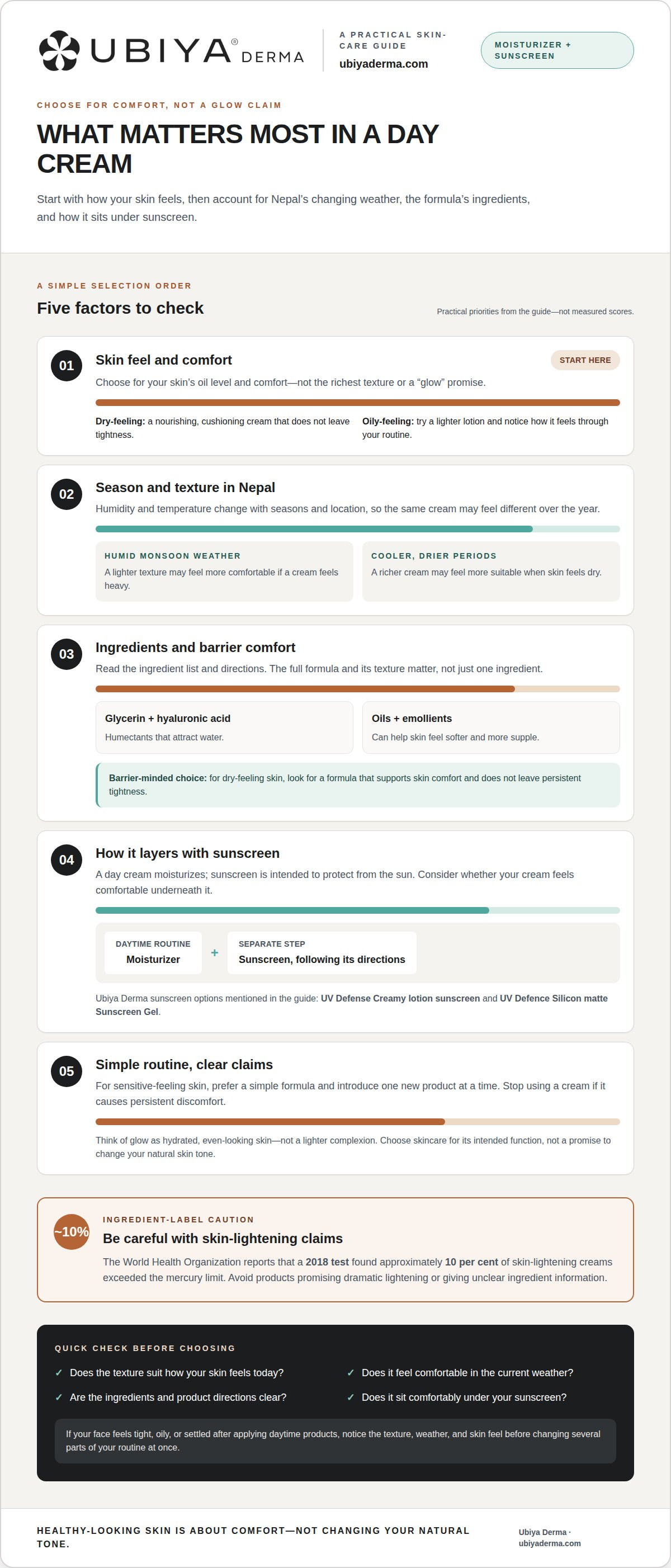
A day cream should suit your skin’s oil level, comfort, and daytime routine. In Nepal, humidity and temperature vary with the seasons and location, so a formula that feels comfortable during monsoon weather may feel different in cooler, drier conditions. Think of “glow” as hydrated, even-looking skin, not a lighter skin tone. The right day cream for glowing skin should feel comfortable and sit well under sunscreen when you use it.
Notice how your face feels after cleansing and throughout the day. If your forehead and nose become shiny while your cheeks feel comfortable, your skin may be combination. If your face feels tight or flaky, consider a richer, more cushioning texture. If it becomes shiny quickly, a lighter lotion may feel better. These are useful starting points, not permanent labels: weather, cleansing habits, and other products can all affect how your skin feels.
Choose a formula for your main concern rather than relying on a “glow” claim alone. For dryness, look for a cream that leaves skin comfortable and supple without persistent tightness. For oily or combination skin, consider a lighter texture on areas that feel greasy. For sensitive skin, keep your routine simple and introduce one new product at a time. If a cream causes persistent discomfort, stop using it rather than layering more products over the reaction.
- Dry-feeling skin: Choose a cream that feels nourishing and doesn’t leave tightness after application.
- Oily-feeling skin: Try a light lotion and assess whether it remains comfortable through your usual routine.
- Combination skin: Apply less cream to oily areas and more to dry-feeling areas.
- Sensitive-feeling skin: Prefer a simple formula and introduce it gradually, without adding several new products together.
Read the ingredient list and product directions before choosing a cream. Glycerin and hyaluronic acid, for example, are humectants that attract water, while oils and emollients can help skin feel softer and more supple. The whole formula matters: an ingredient can feel different depending on its concentration and the cream’s overall texture. Someone with oily skin may prefer a lighter lotion, while someone with dry-feeling cheeks may prefer a creamier finish.
Brightening claims need particular care. A lighter-looking complexion is not the same as healthy-looking radiance, and skin tone should not be treated as a problem to correct. A 2018 test found that approximately 10 per cent of skin lightening creams exceeded the mercury limit, according to the World Health Organization. Avoid products that promise dramatic lightening or have unclear ingredient information. Choose a product for its intended skincare function, not a promise to change your natural complexion.
Some ingredient research explores potential skin effects without proving that every marketed cream delivers them. The European Union reports that polyphenols extracted from coffee silverskins were used in a prototype face cream for their anti-ageing effects on skin. That example concerns a prototype, not a reason to assume coffee-derived ingredients appear in a product or will produce a particular result. For everyday selection, prioritize a formula whose texture suits your skin and whose label clearly identifies its ingredients.
As conditions change in Nepal, reassess how comfortable your skin feels. A cream that seems heavy on humid days may feel more suitable when your skin feels dry in cooler weather. Apply it as directed and notice whether it feels comfortable and layers well with sunscreen. UV Defense Creamy lotion sunscreen is a separate sunscreen option for daytime; follow its product directions. A day cream moisturizes, while sunscreen is intended to protect from the sun.
Ubiya Derma: Retinova Night Retinol 0.3% Serum
Retinova Night Retinol 0.3% Serum from Ubiya Derma is a nighttime option for readers considering a separate step beyond daytime moisturizer. Retinol is a vitamin A derivative used in skincare. Follow the product directions and introduce it as a distinct step rather than adding several new products at once.
Keep daytime care focused on a moisturizer that suits your skin and sunscreen. Ubiya Derma offers UV Defence Silicon matte Sunscreen Gel and UV Defense Creamy lotion sunscreen. Choose based on the texture that feels comfortable in your routine, including as Nepal’s seasons change.
For product information or advice, visit Ubiya Derma’s website.
Make Your Routine Work for You
Let comfort guide any adjustments. Over the coming weeks, notice whether your skin feels tight, oily, or settled after applying your daytime products. Jotting down the texture, weather, and how your skin feels can help you spot patterns without changing several parts of your routine at once.
That steady approach matters in Nepal, where seasonal conditions can shift how a cream feels on your skin. Choose a day cream for glowing skin by how it supports your complexion, not by promises to alter your natural tone. If you want to discuss a suitable routine, Ubiya Derma offers skincare options including Retinova Night Retinol 0.3% Serum and sunscreen products. Your next step can be a simple, informed conversation rather than another guess.
Contact Ubiya Derma for advice, and move forward with a routine that feels considered and manageable.